Categories
Recollections

Memberships, Curtains, Stage

Membership Card
Membership Card

The move also required printing up a new card with the owl logo and the new address. The life time membership cost a dollar. Harvey wanted to scrap it altogether, but I refused as this to me was part of Le Hibou identity. I felt that people were proud to have a Le Hibou membership card in their wallet, and they expressed it to us many times. So it was kept.

At first I set the stage on the large platform in the bay window on the left. I had moved the front door to the right where the second large bay window was located. Thus we had a more discreet way for the public to come in, and we also had better control. Having the stage on the platform made more space for seating but also it created a long room. As before, for the background we used discarded CBC black curtains (limbos) and thus blocked any peering eyes from the street. But sometimes there was a small space in between the curtain and we would see happy faces taking in the free performances.

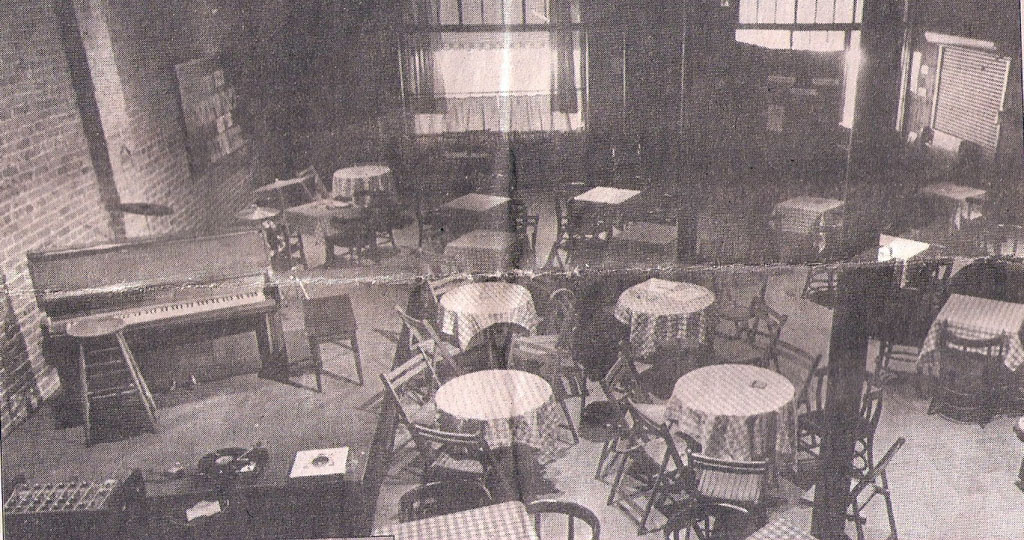
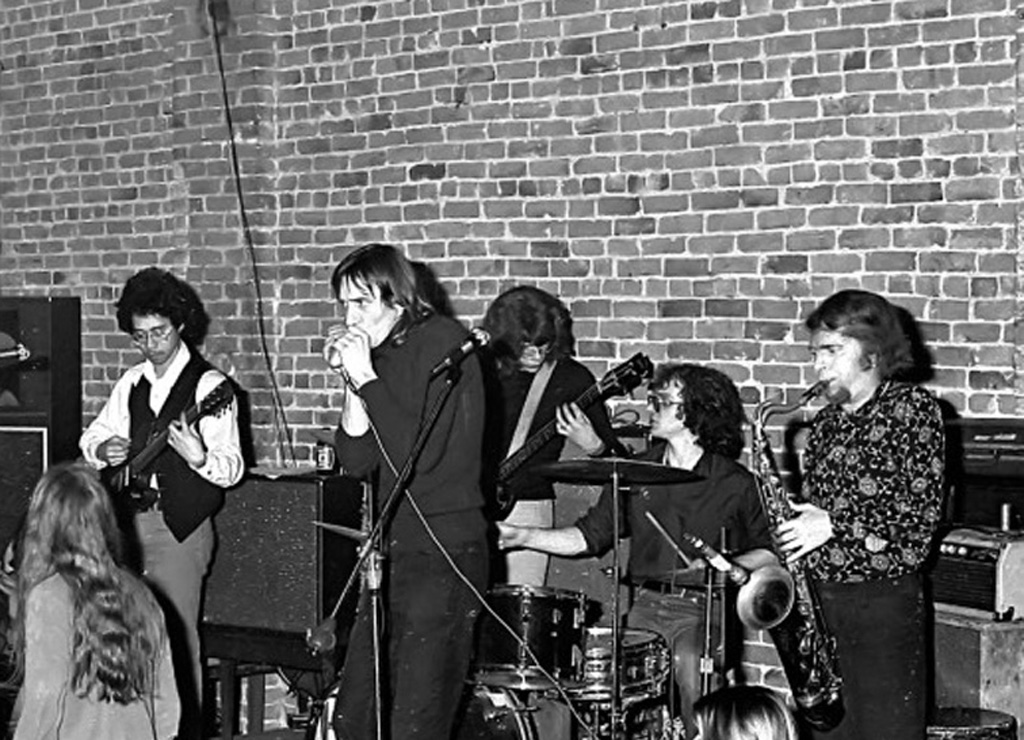
The performer was also at a small disadvantage since he or she had to walk through the crowd to get to the stage. And since the front door was close to the stage, it created a distraction when somebody wanted to come in during the set. So, I decided to put the stage along the brick wall right in the centre of the room to solve all these problems. With that beautiful wall we required no background curtain whatsoever and we also instantly created a proximity between the artist and the public and enhanced the intimacy. That proved to be quite so as everybody would rave about the closeness to the performers, be it folksingers, jazz, blues, or actors.

Chac Mool / Potbelly Boutique

Penny also moved her Chac Mool Boutique to the new space. She had two large vertical display panels built on wheels which would be opened in the day time and closed and locked for the evening—it was like a large steamship trunk set vertically. As we stored it in the corner, it didn’t take much space. Since Penny had started on Bank Street, she had evolved more and more into designing dresses and developing a good clientele.

Later when her brother, Alan Knight, who worked at Le Hibou, received a scholarship for his Masters at Columbia University, we would take the Volkswagen van down to New York. There, we stayed at his flat on Orchard Street, where all the textiles remnants shop were located. Most of the shop owners were Jewish and connected with the New York textile industry. They had plenty of fantastic ends of lines at great prices. We had heard (urban myth?) that they were quite superstitious: If they didn’t sell to their first customer, the day would be lousy. So Penny was always there as soon as they opened and, whether it was due to superstition or something else, always ended up with excellent bargains.
Categories
Recollections

Creativity & the NCC

Of course now that we had moved to larger premises, I received visits from many municipal officials. The first was the health inspector. We needed an extra bathroom and three sinks in the kitchen, which we provided. The Fire Regulations inspectors required t an alarm system and an emergency light on the premises. That was the wording in the “Regulations,” with no particular details. So when the inspectors arrived the following week to verify the changes and asked about my alarm system, I hauled a large school bell from under the counter and rang it vigorously. They looked at one another, astonished, for a moment and then murmured slowly, “Well I guess that’s okay. Everybody will hear that.” When asked about the emergency light, I reached again under the counter and produced a large square powerful flashlight. Again the same look of surprise, but they said that’s what the regulation stated: You needed an emergency light, you have it, and it is okay. The fire inspectors had also required a fireproof enclosure for the oil furnace as well as a fire door in the back with “panic hardware.” Luckily for us, the National Capital Commission agreed to pay for it as it was considered a property improvement. A few years later, the fire inspectors came back with new and more explicit regulations, and I had to add a battery operated lighting system which would go on when the electrical system failed. But the warning bell was OK.

On another visit, health inspectors had other issues. When they spotted the Italian espresso making machine they examined it as if they had just seen an alien. “Is this machine safe? Where was it made? Italy, you say? Is it going to blow up in your face? Who approved it?” So I made them a few cappuccinos, which they grateful accepted. One inspector noticed on the side a little Canadian Standards Association (CSA) approved stamp, and then the tone got even better. “Well , if the CSA approved it, it must be alright.” But then as though they were determined to find fault, one inspector queried about the hairy cedar planks on the wall. The hairy cedar planks? What if a small sliver of wood fell off onto a client’s food, does that not cause a hazard? I said that I didn’t think so, after all, we use toothpicks all the time, do we not? He agreed. So we passed the health inspection.

Categories
Recollections

Brick Wall, Counter and Owl

A few weeks before we finalized the rental of the space from the National Capital Commission (NCC), John Leaning, the NCC chief architect, John McClelland, the NCC property manager, Harvey Glatt, and I met at 521 Sussex Drive to view the premises and to finalize the rent. As we surveyed the premises, on one wall, which was covered by peg board, I noticed a tear. As I yanked the peg board back, a beautiful old brick wall was revealed underneath. Once we became tenants, Alan Knight, my brother-in-law, and I took the peg board down and scraped off a large patch of whitewash with a wire brush on one small section of the wall. And there we had it—a beautiful brick south wall running the length of the coffee house. Much later Crawley Films used the wall as a background to film one of Buffy Ste Marie’s songs, which was included in a film on Saskatchewan.

Matt Stankiewicz, an architect whom I had met at a Exhibition Canada graphic designers parties, and who later backed me up on my crusade against the University of Ottawa’s new campus design, offered to draw up a plan for the new Le Hibou. I was delighted, but had one requirement: I wanted a counter to display our Italian espresso machine and our wonderful European cakes from Bronson Bakery—cakes made with real butter in those days; they also had a great mocha cake and a fabulous Black Forest cake. I also wanted to display the great varieties of tea that we offered, Darjeeling, Lapsang, Souchon, Earl Grey, English Breakfast tea, Green tea, Asssam and many more. While this range of coffee, tea, and desserts is more common today, it certainly wasn’t in the 1960s when even the kiwi fruit had not yet been introduced.

Buffy Ste MarieNot only did Matt organise a beautiful, functioning kitchen, which we never had on Bank Street, but he also incorporated an open window space between the kitchen and the front counter so we could pass orders through. On top of the outside counter where we had the espresso and the cakes displayed, he added a sloped roof with cedar singles. This created a focal point in the room while also harmonizing the seventeen-foot vertical scalloped “hairy” B.C. cedar board Matt specially ordered and had installed on the north wall.

We required a sign for the front of the building. Doug Peaker, a graphic designer from the C.B.C., came up with an inexpensive and ingenious idea. He designed large cut-out plywood letters that he had cut at the CBC carpentry shop. It read “Café Le Hibou Coffee House”. We painted them white. He also made two large blow-up of our signature owls, which were to be placed on each side of the letters. The owls and letters covered the top front of our building and made it hard to miss. I brought in a ladder, and with a lot of directions and expletives from below and above, we were able to screw everything in and reasonably in line.

We were about ready to open, but then we needed more chairs and tables. Al’s Used Furniture on the market our main provider and other used furniture stores were our sources, but prices had gone up from. 50 cents to a $1, even to $2 for less wobbly chairs. Tables had shot up from $3 to $5. Somehow we managed to get everything together including better lighting and an upgrade in the sound system. Again I was fortunate to have CBC sound and lighting technicians advise.

In February 1965, we moved into our new premises.

Categories
Timeline Recollections

521 Sussex Drive

At the time (1965), the National Capital Commission was planning to create a Mile of History on Sussex Drive and they started to acquire all the buildings and to restore them. They planned to rent the ground floor premises to stores and restaurants. Le Hibou became their first coffee house tenant.

The new site was at 521 Sussex Drive, a block and a half from Rideau Street and a block from the market. It was a heritage building with large glass windows and a massive, ornate wooden door. The place was a dream come true. It was almost three times the size of 248 Bank Street, with a 15-foot high ceiling that still had the original stamped tin tile. There were two steel posts in the large main room, but nothing to hinder the view of the stage. Almost predestined for Le Hibou there were large H’s inscribed on the tile floor. (It had been the home of the Hobby House.) In the back there was a good size room, ideal for a kitchen with steep stairs leading to a mezzanine above, which in turn divided into two spaces, one ideal for a performers’ room, and the other for the film projector and the stage lighting control.

There were drawbacks for us since the market at the time had quite a sordid reputation with prostitutes and their clients, and I wondered if that would be a deterrent. The rent certainly was not, however. At $275 a month, it was most reasonable, with the understanding that all costs for renovation on the inside had to be borne by Le Hibou. And of course Le Hibou was quite prepared to do that.

Interior, 521 Sussex Drive
Categories
Recollections

Move to Sussex

Ian and Sylvia
Ian and Sylvia

One impediment to profit, so I thought, was the size of the coffee house. The stage and backstage took a lot of space, and we could only accommodate 60 to 65 people. With a larger venue, things, I thought, would be different. It would also have been different for our performers since we really did not have a space for either a dressing room or a backstage room. For a play it was worse as the stage and backstage took a lot of space. In the front, we had a small kitchen and an even smaller room for storage (when we had plays, we stuffed tables there). So to accommodate performers we kept a space for them in the back near the door. It was not private, and while artists like Sonny Terry and Brownie McGhee, or Ian and Sylvia, did not mind chitchatting with fans, others were more reserved. For those who wanted refuge between sets, it was the kitchen. Obviously the room was too small, and the fees for a solo artist had increased.

For theatre, it was worse. We also needed extra space not only for the stage but for the off-stage actors who needed space either on the side or back of the stage. This would really cut in on seating space and of course reduce revenues at the door. For the plays I had retrieved discarded black drapes which were called “limbo” at the CBC. Many were torn or no longer had a matching section. We stitched them together with black thread, and I don’t think anybody noticed the mismatch. We had by now acquired a few regular stage lights and one rheostat capable of dimming the lights. The low ceiling was a nightmare for the lighting director, who had to sit among the audience to control the lights. The brush with the law concerning a noise complaint was also a constant concern. We kept the back door closed, but was the previous complainant ready to strike again?

NCC Architect John Leaning

It was time to look for another venue. I started researching possible sites, preferably in a commercial area in the centre town area. But no site looked promising. I then called John Leaning, Chief Architect with the National Capital Commission, whom I had met when I wrote The Fulcrum article on the proposed twenty-five-year plan for the new campus. A week later John called to say that he might have a place for Le Hibou.

Categories
Recollections

Bearded Owner Charged!

Bearded Owner Charged - Ottawa Citizen
Bearded Owner Charged – Ottawa Citizen

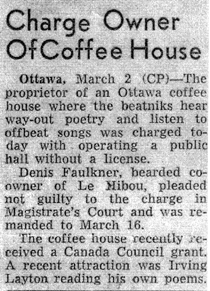
While on Bank Street, I was charged by the City of Ottawa for operating a public hall without a licence. Some neighbour, obviously not a fan of good music, complained about the noise. So I was charged, perhaps because, as the newspaper reporting seemed to think important, I was a “bearded man”. Usefully, my partner Harvey Glatt had a friend Arnie Goldberg who was a lawyer. He took on the case. The plaintiff was at court on the appointed day. Arnie very cleverly remanded the case, and then he remanded, and remanded, and remanded until one day the plaintiff was not there, so the judge promptly threw the case out. Le Hibou won the case, but we lost on fees.

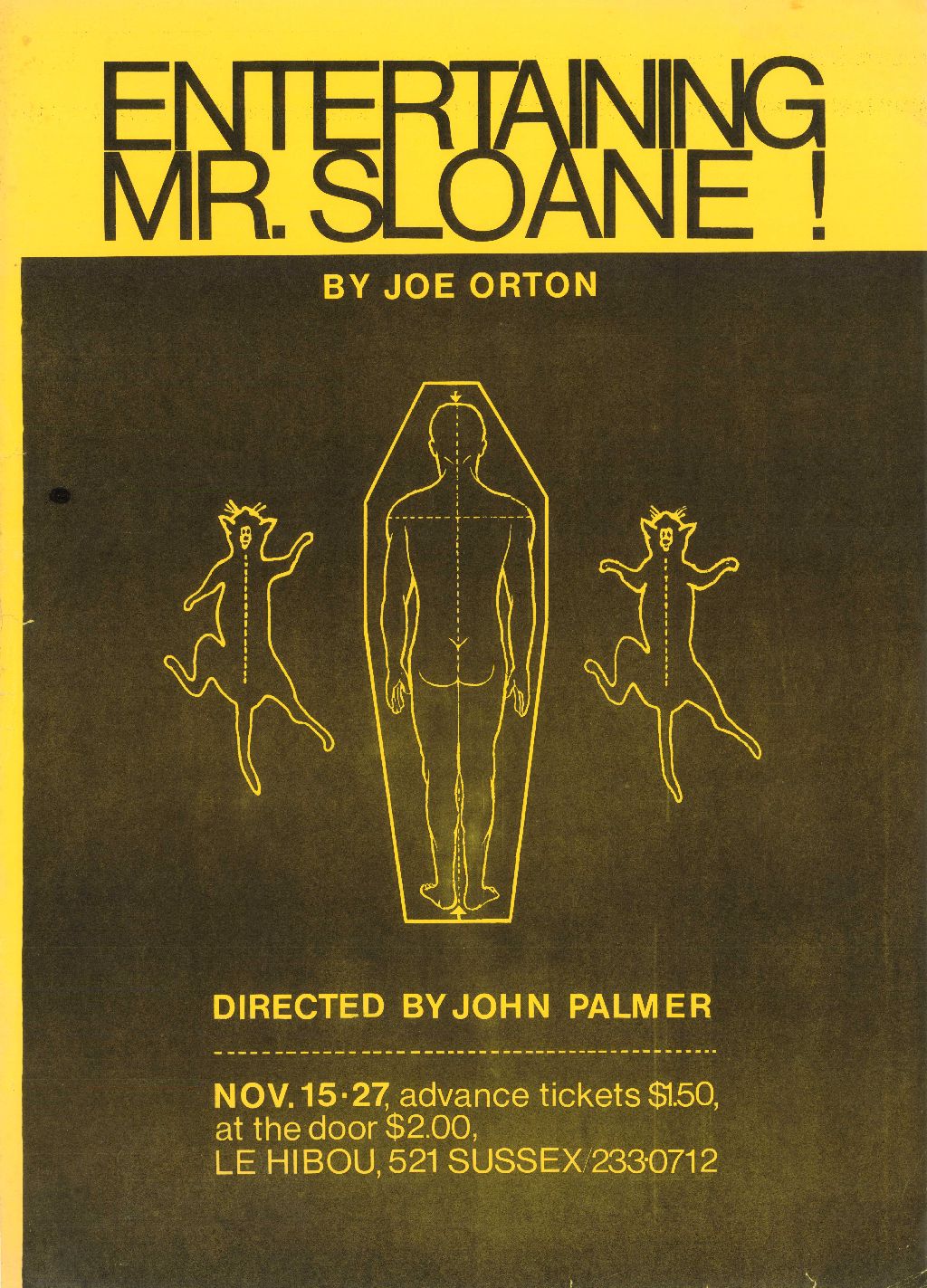
In November, 1966, Le Hibou presented “Entertaining Mr Sloane,” a riotous farce which had been a hit the previous year on the London, England stage. Besides the usual advertisement, Penny and I wondered how we could publicise it in a different way. We came up with the idea of using a prop from the play, a coffin that several people carried very solemnly up and down the Sparks Street Mall hoping to catch attention and also get a picture in the paper. Penny’s task was to call the newspaper from a phone booth and asked them what was happening—a clever idea in theory, but in practice it backfired since the answer from the reporter was, “Well, it’s coming up to Remembrance Day, so it likely has something to do with that.”

On another occasion we decided to use a walking sandwich board, but who would do it? We approached my brother-in-law, Alan, who was about sixteen years of age and over six feet tall, and he reluctantly agreed. But he did it his way, in his inimitable fashion. He walked slowly up and down the Sparks Street Mall with the sandwich board on his back and front, reading a book, smoking a corn cob pipe, and donning a flat straw hat, oblivious to startled passers-by. His odd demeanour and sandwich board caught the eye of an Ottawa Citizen photographer (the Citizen was located on Sparks Street then) and next day, to our great delight, his photo, sandwich board and all, appeared in the newspaper. So, for the play, “The Duchess of Malfi,” a modern version of a gay Jacobean drama, we were able to attract attention and perhaps a few more spectators.

Categories
Recollections

Volkswagen and Chac Mool

Family Camper
Family Camper

One summer, Penny, Stephane, Alan Knight, and I took a five-week trip to Mexico, Guatemala, and El Salvador in a converted Volkswagen van. We slept in the van, while Alan bravely slept outside in a pup tent. Along the shores of Lake Atitlan in Guatemala, Penny met an itinerant cloth seller. We bought quite a few pieces of fabric and Penny, who spoke fluent Spanish, arranged to have him send beautiful hand-woven cloth back to Canada on a regular basis. Since he could not read or write, everything was arranged through a translator and sent by him to Ottawa, which I in turn picked up at the customs office. It was quite long and laborious at customs, since they (as many functionaries seem to do) always had a lengthy discussion about the cloth itself: was it a finished product or was it just cloth? The designation made a big difference on the custom fee. From what I have heard, it is still the same at customs.

To accommodate the shawls, tablecloths, and other items that Penny sold at Le Hibou on Saturday during the day, we had a large trunk built on wheels that stood upright so that it would open and its contents could be displayed on shelves. When not in use we would just close it, lock it, and store it in a corner. At first only the cloth was sold, then Penny started to make dresses using the material. Thus started the Chac Mool Boutique. The boutique retained a connection with Le Hibou since we had numerous fashion shows at our new location on Sussex.

Chac-Mool Pre-Columbian Mesoamerican stone statue.
Categories
Recollections

Dance

We even had dance at Le Hibou. Elizabeth Langley, a professional dancer from Australia had befriended Penny, and even lived in our third-floor flat for a while at the Cartier Street house we rented after we moved from Cooper Street. She also worked occasionally as night manager.

Elizabeth Langley
Elizabeth Langley

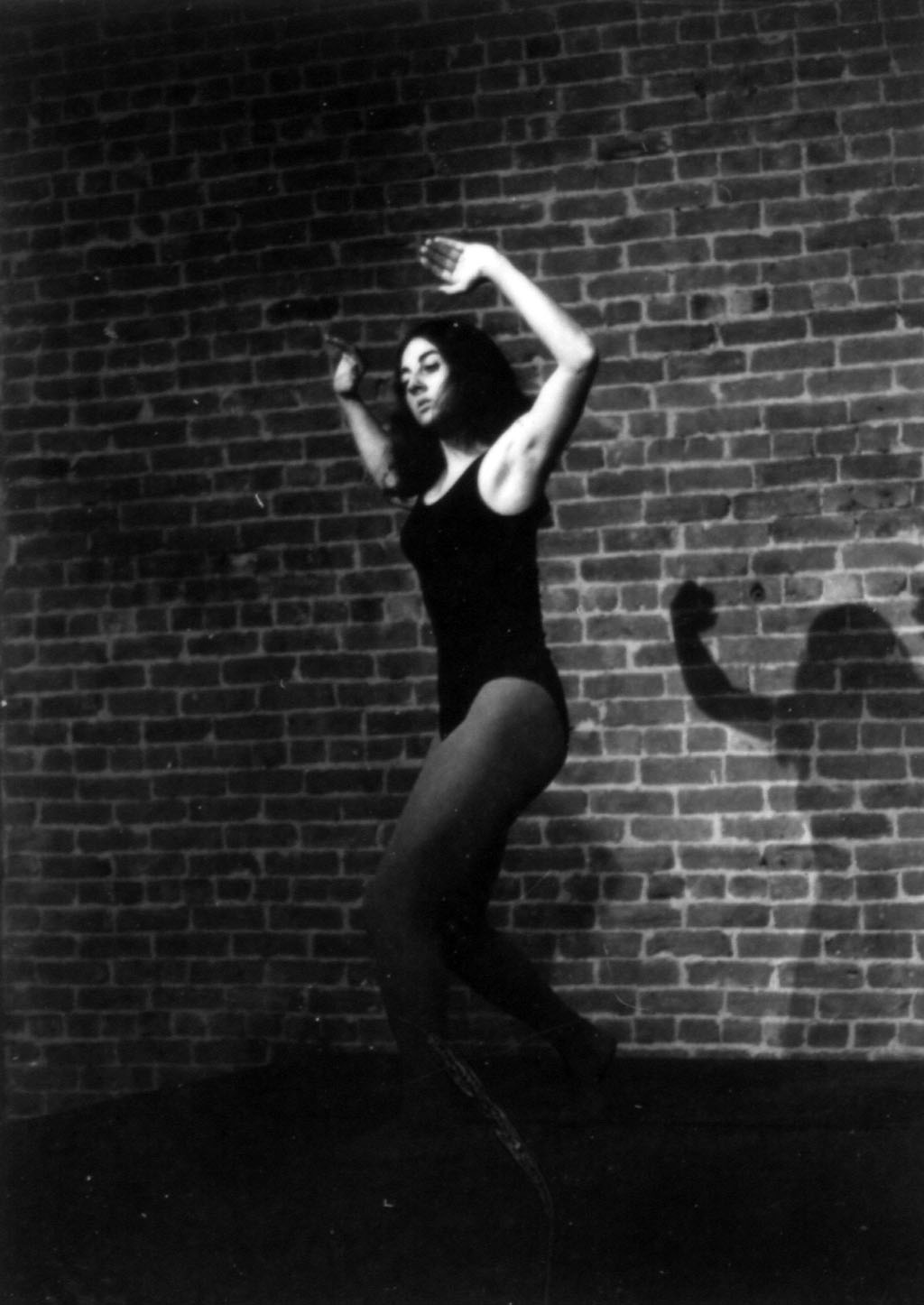
In February 1964, she gave a lecture and performance on modern dance, which was quite appreciated. Elizabeth had immigrated to Canada, while her brother had moved to Christ Church, New Zealand to open a café. She liked Le Hibou, as it reminded her of her brother’s café. Years later while doing documentaries for the CBC in New Zealand, I visited his café, and it really was very much the same as Le Hibou on Bank Street—the stairs leading straight up to the long rectangular room (without the black paint), the espresso coffee maker, the warm cordial atmosphere—very much the same, but on two different continents.

Categories
Recollections

Hootenanny Night

David Wiffen
David Wiffen

We continued the poetry readings for a while, but we had lost the intimate atmosphere of 544 Rideau Street and fewer people came. And what was informal on Rideau—the impromptu singing—became more formal on Bank. That’s when I instituted the Hootenanny. At first, it ran Sunday nights. Then I shifted it to Monday since it permitted us to have the weekend performer for one extra night. Monday was a slow night in any case. We held many Hootenannies over the years. There was a minimal charge at the door, and the coordinator received half of the door take. The same applied to our regular performers. There was always a base fee of $150.00 to $200.00 per week or 60% of the door receipts, whichever was highest. Performers generally always received more than the base.

Many of the old guard from Rideau Street took on the role of Hootenanny Coordinator, including Nev Wells, Peter Hodgson, his brother John, Bill Hawkins, and later David Wiffen. Sandy Crawley probably did it the longest, though I could not understand why, since some of the performers were very bad. The coordinator would set up the list of performers and set equal audience time for each performer. However, some performers, intoxicated by the chance to perform in front of a captive audience, would prolong their stay. Countless times I witnessed the coordinator jumping on stage at the end of a long, never-ending song, urging the audience to “give him a big hand,” which they did probably out of great relief more than anything else.

Categories
Recollections

Chansonniers and Blues Artists

Tex Lecor
Tex Lecor

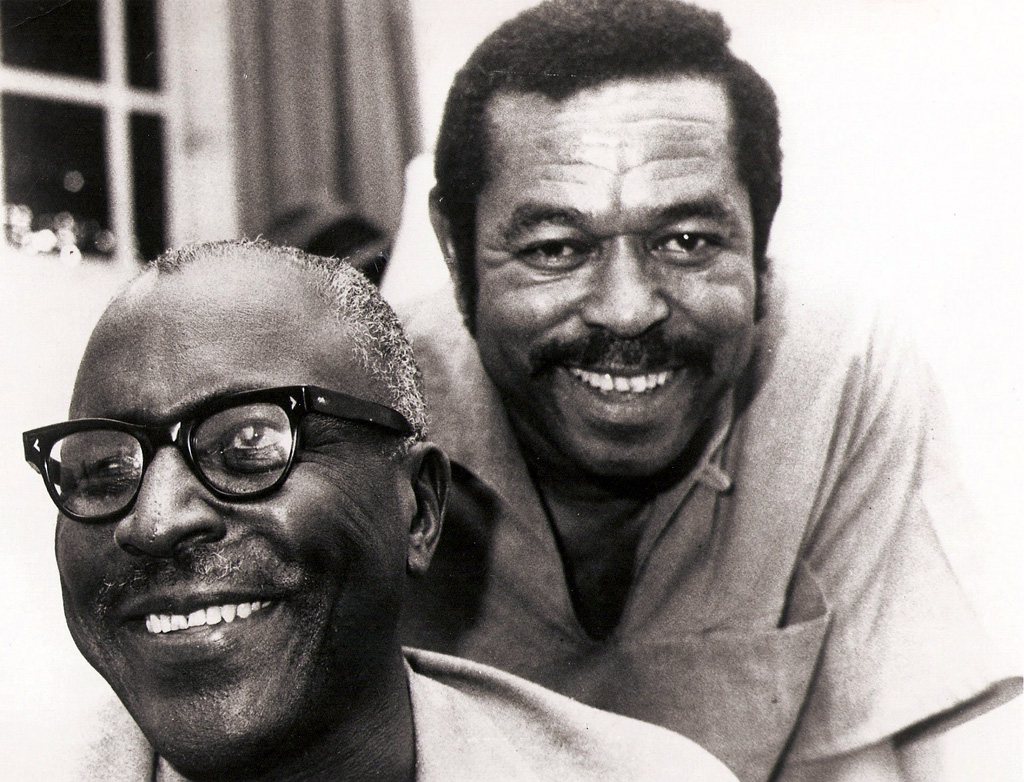
In the first few years Harvey Glatt did the folk artist bookings, and it was only later that I became more involved, especially with the folk and blues bookings. The first blues artist that I booked in 1963 was Reverend Gary Davis, at the suggestion of Bill Hawkins. Bill even offered to put him up at his house, which he did. The Reverend Gary Davis was blind, always jovial (in contrast to some of his blues songs) and constantly sported a cigar in his mouth as well as an apron of ashes on the front of his sweater.

In 1962 we had the French chansonniers Raoul Roy, Tex Lecor, Jacques Labrecque, and Claude Gauthier (who returned many times, and became a good friend as well). That year, I brought in the first international singer/songwriter Stephane Golmann (booked through the Guy Latraverse agency in Montreal). Pierre Letourneau also came, as well the soon-to-be celebrated Claude Leveillée.

Claude Leveillée
Claude Leveillée

Claude was shy then and as he accompanied himself on piano, he would ask us to turn the piano around so that he had his back to the audience. He had a small mirror so that he could see the audience. Later he dropped that habit and became quite relaxed in front of an audience. I met Claude many years later at a Radio Canada studio, and we talked about Le Hibou. He recalled, “God, was it dark in there with its black walls and ceiling.” Another singer/composer from France was Pierre Dudan. “Un café au lait au lit” was one of his big hits that made it to Le Hibou. Michel Choquette also became a regular performer and a good friend. I always enjoyed him as his songs were remarkably unique and many were quite funny.