Categories
Recollections

Theatre

Now that the coffee house could accommodate more people than our old location on Rideau Street, it became feasible to include theatre in the programme, and I decided it was a good time to use the theatre training which I received from René Provost at l’Ecole d’ Arts Dramatiques de Hull, and from Harold Greenberg of Montreal (who came every weekend), who used the well-known Actors Studio method. I had acted in many plays with the St Gérard’s parish local group “Les Masques” and with René Provost’s Arts Dramatiques de Hull group. Although I was a great supporter of theatre, I must admit that I was not such good actor.

In September 1962, we inaugurated French theatre at Le Hibou. Edgard Demers, whom I had met in the French theatre group, directed “The Lesson” by Eugene Ionesco. The first week was in English, and the next week was in French with “La Leçon.” Actors included Gerard Gravelle, Huguette Beaucaire-White, and Madeleine Sanscartier. As Edgard was also theatre critic for Le Droit newspaper, Le Hibou always received very good promotion from Le Droit—well earned, I would add.

Mayor Charlotte Whitton

In December 1962, I produced and directed “Too Many Guys for One Doll,” an original musical satire on municipal affairs and Charlotte Whitton, Ottawa mayor during the early 1960s. The script was authored by “Isabel Edward,” a pen name for Penny Faulkner, my wife at the time, whose first name was Isabella, while my second name is Edward. The music was composed by the remarkable Julian Leigh, who also accompanied the actors on piano.

The satire was set in medieval times, larded with feminist barbs, and featured “Lotti Lollard” jousting with her male councillors and a rogue building developer, “Champ de Lot” (Campeau), played by Charles Gravelle, whom I met at l’Ecole d’Arts Dramatiques de Hull. Lotti (Charlotte Whitton) was played with great verve and enthusiasm by the incomparable Elsa Pickthorne. The city councillors were played by Tom Dunleavy, Maurice Bigras (also from l’Ecole) and Peter Hodgson. Peter (a regular from Rideau Street who later took the stage name of “Sneezy Waters”) was somewhat reluctant as he had never been in a play before. I convinced him by telling him he was already half way there, since he was a folksinger familiar with the stage.

“Too Many Guys for One Doll” was extremely well received, with a packed house for the duration of the two-week run. I was pleased, as it was the first play that I directed at Le Hibou. Only other bookings prevented a longer run. Charlotte Whitton of course came, and she adored the play, thanked Elsa profusely, and said that Elsa would have made a wonderful mayor. Later in 1964, I pursued my foray in theatre but this time instead of directing musicals, I turned to avant garde, in part because I was more interested in contemporary theatre and in part because Ottawa did not produce any such theatre. (The National Arts Centre was not yet up and running.) So the first avant-garde play I did was “The Maids” by Jean Genet with a cast that included Marilyn Nixon, Pierrette Vachon (another former graduate from l’Ecole d’Arts Dramatiques de Hull) and Sheila McCook.
Luba Goy
Luba Goy

In 1965 I directed “Victims of Duty,” by Eugene Ionesco with cast of Gerard Gravelle (now a television host for Radio Canada), Taunia Gravelle (a radio announcer), Noel Almay, Elizabeth Langley (a professional dancer), Robert Whelan (a local poet) and Jean Honeywell. In 1965 I directed “Three Actors and Their Drama” and The Blind Man, both by Michel de Guelderode with a cast including Luba Goy (later with the Royal Canadian Air Farce), Bill Walther, and Don Grant. On the same bill was “Play Without Words” by Samuel Beckett with Luba Goy and Johni Keyworth.

Later in June 1963 the same group (Penny as writer, Julian Leigh as composer and myself) reassembled and put on another musical satire, this time based on John Diefenbaker, entitled “Do You Have Prince Albert in the Can?” (At one time, Prince Albert tobacco was sold in cans. Diefenbaker was born and lived in Prince Albert.) The name was somewhat obscure—perhaps we should have called it simply “Dief the Chief.” In any case, it proved not as popular as “Too Many Guys for one Doll.” Maybe because of the fact that Dief’s popularity was on the way down, a satire on him lost its punch. The actors were Joe O’Brien, George Tremblay (a CBC co-worker), Ken Wilson and Nika Rylski. I also directed “The Day the Whores Came Out to Play Tennis” in 1966. More on that later.

Can you name this Noreen Young puppet?

Having children, I was very interested in having children’s theatre on a regular basis at Le Hibou on Saturday afternoon. The Little Owl Children’s Theatre was established with George Bloom at the helm in February 1964. This went on for about a month until Noreen Young Puppets with Fred Little began to perform regularly. I had met Noreen Young when I was studio director on a CBC children’s show called “Jack in the Box” (Jack Pearse was the host) where Noreen’s puppets were featured on a regular basis. The Noreen Young Puppet Show regularly attracted a dedicated audience. I know my two children enjoyed it very much, although I had to keep an eye on them. My son, Stephane, loved to get into the smoked meat, and Nadine, my daughter, loved the black forest cake.

Categories
Recollections

Le Hibou’s Cine Club

1936 Buick
1936 Buick

On November 17, 1962, the Le Hibou Ciné Club was started. At the time there were few opportunities to see film classics in Ottawa. Alan Knight, my brother-in- law, helped with research for the selection of films. I was always interested in films and theatre. As a teenager, Jean Guy Boutin and I would drive quite often to Montreal to see films, plays and jazz. Since we had little money, we could not afford to stay overnight, so we would drive back in the wee hours of the morning. Jean Guy had an old 1936 Buick, which burned so much oil we had to stop every thirty miles or so, open up the trunk, take out one of the gallon containers of oil, and top up the motor.

A little later, I even tried my hand at directing some films with the help of Albert de Niverville and his Arriflex camera. I joined in with my hand-cranked Bolex. The main actor was Gerard Gravelle, who read poetry at 544 Rideau and who later played quite often in Le Hibou theatre productions. None of those films ever made it to the Oscars.

Jules and Jim - Truffault
Jules and Jim – Truffault

The films we showed at the Ciné Club were rented through Astral Films in Montreal and I would pick up the film at the bus depot. As we could not afford to buy, I rented a projector and screen from Adams and Associates. We learned very quickly to have at least two film projector bulbs since the bulb always seemed to die at the most dramatic part of the film, eliciting groans of exasperation from the audience. One time the film never arrived, and I had to rush over and pick up a film from an Ottawa classic film collector. Unfortunately, he collected only musicals, not quite what our film buffs wanted to see. The programming shown in the afternoon on a Saturday or Sunday was very diverse, with films of many great directors such as Fellini, Antonioni, Kurosawa, Ichikawa, Bresson, Buňuel, Truffaut, and Polanski. The series continued well until the end of 1965.

8 1/2 - Fellini
8 1/2 – Fellini

Categories
Recollections

Poetry

Another event probably helped the visibility of Le Hibou a great deal. Harry Howith, who organized the poetry readings on Rideau Street, had applied at that time for a Canada Council grant to bring in nationally-known poets for readings at Le Hibou. I was incredulous and sceptical, and did not think anything would come of it. But to my great astonishment, the Canada Council agreed to pay $700.00 for the seven poets to cover their expenses. Le Hibou was to pay for advertisements and provide the venue. I was overjoyed. To cover these costs, I charged only 50 cents. I wanted as many people to come to the readings as possible.

Irving Layton
Irving Layton

David Sutherland, a friend and a CBC graphic designer, designed a poster for the event. Our first reading was with Irving Layton on January 10th in 1962. I remember well that it was a cold and bitter evening. A large crowd patiently waited outside to be let in. We squeezed in as many as we could — 70 to 80 maybe, some standing up, but we still had as many waiting outside. I asked Irving Layton if he would agree to do a second reading, and he graciously accepted. More astonishingly, the crowd outside continued to wait, stamping their cold feet and running for coffee at the nearby restaurants to warm up.

Louis Dudek
Louis Dudek

The readings went on every Tuesday night (our regular poetry reading night at the time) till February 22. Others who followed Irving Layton and were very well received included Peter Miller, John Robert Colombo, Gwendolyn MacEwen, James Reaney, Jacques Godbout (in French), and Louis Dudek. The series went quite well and the 50 cents covered our costs. What was so heart warming was the poet’s reaction to such an enthusiastic crowd. On this special and rare occasion, the poets had the chance to connect directly with their audience. The Canada Council, along with Harry Howith, who also introduced the poets, deserve a big thank you for the series.

Categories
Recollections

Venue and People

Sarah Vaughan
Sarah Vaughan

A new and larger location enhanced the scope of Le Hibou. I had always wanted Le Hibou to be more than just a venue for out-of-town performers and although I was working full time at the CBC, I had still greater ambitions for the coffee house. I wanted to feature local talent in the widest sense of the word, be they folksingers, chansonniers, actors or artists. I dreamt of a small incubator for the arts, and I think Le Hibou eventually did become just that. Born French-Canadian in Ottawa, it was natural for me to want a bilingual coffee house or “boîte à chansons.” Le Hibou soon became a showcase for French performers and French theatre. This blending of the two cultures seemed to work rather well. Indeed, I think it was the only bilingual coffee house in all of Canada at the time and thereafter. As folk was in revival mode, it was also natural to feature Canadian and local folk talent. Harvey Glatt, now a partner, brought in some of the Canadian, and later American, performers. At the beginning, I concentrated on the theatre (French and English), French performers, jazz, and Le Hibou’s ciné club. The first jazz group I booked was the Russ Thomas Trio, whom I met along with Brian Browne and Wyatt Ruther when I belonged to the Ottawa Jazz club, a small group of people involved in supporting Ottawa jazz artists and promoting jazz in general. Prior to Le Hibou, Jean Guy Boutin and I would be at the Circus Lounge on the second floor of the Ottawa House in Hull to hear the likes of Dwike Mitchell and Willie Ruff, the Al Belletto Sextet, Abbey Lincoln, or at the Standish Hall, the Gatineau Club in Hull or the Coliseum in Ottawa to catch the greats, such as Louis Armstrong and Sarah Vaughan. On many occasions we also would be off to Montreal to catch some other great jazz artists at the Esquire Show Bar. The first French chansonniers featured at Le Hibou were Claude Gauthier from Quebec, followed by Stephane Golmann, (French from Switzerland).

Claude Gauthier
Claude Gauthier

They both performed in January 1962. In March 1962, the incomparable Pauline Julien performed for the first time in Ottawa. Pauline was a passionate defender of her nationalist beliefs, and as I was passionate about Canada, I was aching to have a discussion. Good sense prevailed (I probably would have lost out anyway) so the conversation never took place. She was most professional, never brought it up, and stuck to her art. I often wondered how she felt about performing in Anglo Ottawa.

Renée Claude
Renée Claude

Renée Claude, a marvellous singer who would become a big star in Quebec, came later and also Robert Charlebois, who performed solo then and was not yet as famous as he would later become. After the show he would always jump on the bus to go back to Montreal since he had been warned by L’institut d’Art Dramatique that if he missed any more classes he was out as a student. With the audacity of youth, I had delved into the world of French cuisine. Not having the means, however, to frequent such renowned great restaurants as Café Henry Burger, some friends and I established a rotating gourmet club. Each couple would invite the others and one couple would provide the gourmet meals for the others at home.

Robert Charlebois
Robert Charlebois

Even though we had a limit as to costs everyone would always try to out-do the others by having a little special something to elicit a few oohs! and aahs! Having thus honed my culinary skills with friends, I felt confident enough to invite visiting performers. Renée Claude was one such guest. I lived at that time in an old three-story double at Cooper St near the driveway. (It is now gone as they built a hotel on the site.) The apartment was quite big with large windows and high ceilings, and I had painted everything off-white, the big trend at my artist friends’ apartments. I had prepared escargots a l’ail, coq au vin, salad, and finished with chocolate religieuses for dessert. Renée seemed to enjoy every bit of it, although I noticed her accompanist only nibbled at the food. Later Renée explained that her pianist was always nervous before a performance and rarely ate, although it occurred to me later that maybe he thought it was terrible, and that Renée was just being polite.

Andre Gagnon
Andre Gagnon

The accompanist was André Gagnon, not yet an international star. There was also some unexpected publicity for Le Hibou. At this time, I graduated from the University of Ottawa, and the graduating ceremony was held at the magnificent Capitol Theatre (now unfortunately demolished). I was urged by Bill Boss (the Communications Director) to stay after the ceremony for photographs. The invitation perplexed me, as I certainly was not graduating summa cum laude. The answer to his mysterious invitation came the following day when I discovered in the Ottawa Citizen my photograph with the caption “Denis Faulkner, founder and owner of Le Hibou, graduated last night…” I realized then that in the eyes of the University and the newspaper, Le Hibou had become an important part of the Ottawa fabric.

Categories
Recollections

Coffee and Food

For our espresso and cappuccinos, we still had the little cone-shaped aluminium espresso coffee makers (from Preston Street), and of course I had to buy a few more to keep up with the demand. Later, with the help of Pietro Pace of Caffe Italia on Preston Street, I was able to purchase a real, second-hand Italian espresso coffee maker from Montreal for about $700. Le Hibou became the proud owner of the second espresso coffee machine of all Ottawa. We offered espresso, café au lait (now called “latte”) and the very popular cappuccino, a café au lait, with whipped cream sprinkled with chocolate or cinnamon.

The coffee machine became a source of constant worry as kitchen staff, despite being warned not to make cappuccinos during a performance, seemed without exception to wait until the performer was in a ballad and, perhaps tempted by the gods, then fire up the espresso machine to froth the milk, hoping in vain to beat the odds. They thought that by just opening up the steam valve a little they could control the noise, but it never worked—the loud gurgling could always be heard, followed by a shocking blast of noise, invariably terminating in an apologetic, loudly whispered “Sorry!” emanating from the kitchen.

Van Houtte Coffee
Van Houtte Coffee

House coffee came from Montreal since at that time I could not find a good source of coffee in Ottawa. I discovered a very good Mocha Java from Gerard Van Houtte in Montreal (later acquired by A L Van Houtte). It became our house coffee for the duration of my eight years at coffee house. They would send it weekly by bus, and I would pick it up at the bus depot. The staff at the depot kept suggesting that I order it more often since they loved the aroma. For the espresso of course I had a good supplier in Ottawa in Little Italy. As for the teas (Earl Grey, Assam, English breakfast tea, Lapsing Souchon, green tea, etc.), they were purchased at Peter Devine’s store on the market.

As to food, we kept to the same menu. Although Paul Mostovac could not provide his delicious cakes anymore, by a stroke of luck the best French pastry establishment in Ottawa at the time, Constantine, happened to be located a few businesses away from Le Hibou, and they quickly became our pastry supplier. The food—sandwiches of smoked meat, or ham and cheese on Rideau Bakery rye bread, or Kaiser rolls from Tatra Bakery in Hull—remained the same, but there were no more candlelit romantic meals since I was now working full-time at CBC TV as a studio director.

Categories
Recollections

Management, Ads & Bookings

We met, and George and I agreed that Harvey could become a partner of one third of Le Hibou by investing the same amount as we had: $800.00. As I had not booked the second week after Tom Kines, Harvey, who was managing The Courriers at the time, booked them for the second week. The membership fee was kept and we added a door fee. But to allow for one-time walk-ins, we charged an extra 50 cents or $l.00 according to the performer. We needed more tables and chairs, so it was off to Al’s second hand store. To create the illusion of space, I decided to paint everything black, including the tables and chairs. We set up a work party and painted all the chairs and tables black. Then we wondered, with the ceiling, wall, chairs and tables all painted black, how would patrons find their seats? The red and white tablecloths and the Chianti fiasco candles helped.

I had managed Le Hibou on Rideau Street, and continued to do so on Bank Street. With paid entertainers every week the task became more onerous. As manager, I was responsible for staffing, buying the food, hiring, paying the staff, doing the books, paying the bills, plus promotion and publicity, along with some of the bookings. In the first few years, Harvey Glatt did most of the folk bookings and I concentrated on the French chansonniers and the English and French theatre.

Over time I ended up doing most of the bookings, as Le Hibou also got into blues and jazz. Every week, press releases and ads had to be placed in the Ottawa Journal, the Ottawa Citizen and Le Droit, as well in the university student papers, The Fulcrum and The Raven. Many times, as photos arrived late, I had to deliver them to the newspapers in the evening. Luckily, the Ottawa Citizen was then on Sparks Street, and the Ottawa Journal was on Kent.

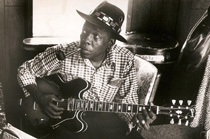
John Lee Hooker
John Lee Hooker

The first year we ran our newspaper ad with the headline “Le Hibou in association with Treble Clef.” We did this so that we could benefit from the Treble Clef high frequency, low advertising rate. But after a year, since we advertised every week, we had a higher frequency than Treble Clef. I then removed the Treble Clef designation since I thought it created confusion, and did more advertising for Treble Clef than for Le Hibou.

We now required one extra person to tend to the door. As I was now working for the CBC, sometimes in the evening, I could no longer be there consistently, and so we needed night managers on a daily or weekly basis. Although Harvey Glatt never managed to work at Le Hibou, George Gordon Lennox, the other partner, did work the door or night manage occasionally. But when he got a job as a journalist with the Ottawa Journal, and later as an editorialist, there was less and less involvement. A few years later George accepted a job with a United Nations agency and moved to Geneva.

Categories
Timeline Recollections

248 Bank Street

The new location at 248 Bank St. looked promising. One could accommodate 60 to 70 people with tables and chairs, well over 100 people with no tables, which we did when we had plays. Of course, I kept the red and white checked tablecloths, the large fat straw covered Chianti bottles and candles even though they would drip on the tablecloths and make a mess, but everybody loved them, including me. I required a stage quickly as I had already booked Tom Kines for the opening week.

Chianti bottle
Chianti bottle

Luckily a long time friend and Le Hibou member Jean Guy Boutin came to the rescue and put a stage together, which of course we painted black. It had a long life as we moved it to 521 Sussex later. Lights were pretty rudimentary—two 150 watt flood lights on a clamp with an on and off switch. We used stitched together black felt and nailed it to a 1 x 2 wood frame which provided a back curtain. There was a small glass brick wall in the main room, which I kept for a while but had to remove later so people could see the stage more easily. The floor was concrete, perfect for sound and security. At about that time (1961) Harvey Glatt, owner of Treble Clef Records, approached George and I about becoming a partner.

Categories
Recollections

Time to Move

By luck, I found a second floor space above a Sherwin Williams paint shop. It was a long narrow space with a small room and a window in the front—perfect to set up the kitchen. The rent was also reasonable. I suspect that the place had been up for rent for a long time, as the manager of paint store was thrilled to have us.

The new Le Hibou site was not the only thing that happened that year. I also married Penny Knight, and we rented a new apartment at 117 Cooper.

Bolex camera
Bolex camera

Gerard Garneau, along with his brother Jean, were regulars at Le Hibou. Gerard worked at the CBC as a studio director, and he was leaving to do his Master’s in International Affairs at Carleton University. He suggested that I apply for his job and said I could count on his recommendation. Having just graduated from the University of Ottawa, and having studied theatre and acted in many plays, even made some short films using a l6mm hand-cranked Bolex camera, I thought, “Why not?” To my surprise, I got the job. As I soon realized, television was new in Ottawa and everybody was learning on the job.

Preparing for the new Le Hibou, I booked my first performer, Tom Kines, a well-known local traditional folk singer. A new era was about to begin.

Categories
Recollections

Pastries and Poetry

I had to find a way to bring in money and new customers, so I decided to open the place up as a little bistro in the evening offering very eclectic cuisine, mainly French but also Italian, Japanese, and even Indonesian.  My future brother-in-law, Alan Knight, who was sixteen and already at Carleton University, became my sous-chef.  Every day I was at the marketplace choosing meats, fish, and vegetables for the evening meal.  It seemed to work, and we had a steady clientele.  They loved the food, the prices, and the fact that I never queried them about the contents of the brown bag they brought along.

We also set up a few tables on the balcony overlooking Rideau Street.  It was probably the first café terrasse in Ottawa at that time.  I recall one particular evening when Carlos, with a beautiful date (as always), came rushing into the kitchen proclaiming that he’d just been server the best salmon he had ever eaten.  I had made a pretty good salmon teriyaki, but I suspect the contents of his brown bag had greatly enhanced the flavour.

Another turn of events helped with summer revenue.  CJOH TV featured a local chef weekly on its early evening program.  For some reason they invited me.  I still to this day have no idea why they did so. Maybe it was for a bit of comic relief.  Alan, as sous-chef, insisted on being there even though they told me I was the only one to be interviewed.  So we each washed our two white aprons (purchased at C.A. Paradis) three times and with lots of bleach so that they would look as professional as possible.  The dish we chose was Hati Bumbu Bali, a highly spiced Indonesian dish.  The choice was inspired by Alan’s brother-in-law, who was Indonesian. In those days, there weren’t any Indonesian restaurants in Ottawa.

Looking back, the dish we chose was probably not a wise choice since liver is not everybody’s favourite.  The interview went well, and I talked abundantly about Le Hibou.  Alan, markedly tall for his age, stood silently in the back, mute as a telephone pole.  Then came the cruncher:  “Could you finish the dish—we have only one minute left.”  I had prepared very little by then (perhaps I should have talked less) and it was a mad scramble for Alan and I to complete a half presentable dish.  Nevertheless, as a result of this interview, we had many new members and diners, although nobody asked for the Hati Bumbu Bali.

Despite a strong membership, Le Hibou could not live on people, pastries, and poetry alone. We needed a larger place, with paid entertainment on the weekends. What’s more, I was receiving not-so-subtle hints from Dr. Dupont, the landlord, that maybe it was a good idea to start looking for another venue, a venue in a commercial district perhaps. I quite agreed. So the search was on to locate a place, preferably in Centretown, close to the two universities and colleges.

Categories
Recollections

A Burst of Growth

That year (1961), the University of Ottawa revealed its twenty-five year building plan, a plan concocted by three people: architect Jean-Serge Le Fort, Bill Boss, the U of O Communications Director and then Rector Rev Henri Légaré.  I was both appalled and infuriated by the plan.  Most of my courses at Ottawa U were in a Le Fort building, a bleak, rectangular, soviet-style building with few redeeming features.  Moreover, these twenty or so buildings that were proposed in the twenty-five year plan had no connecting fabric—just a bunch of buildings scattered about.  I thought that, with the U of O campus being in the heart of the nation’s capital, the city deserved better.

I wrote a letter to the University of Ottawa student paper, The Fulcrum (still going strong), venting all the fury of my young, idealistic heart.  It was not long before journalists picked up the story, and Le Hibou was swarmed by the media for television, radio, and newspapers interviews.  A group of Ottawa architects applauded, met, and pressed for changes to the plan.  At meetings, I met Matt Stankiewicz and John Leaning. More about them later.  The furor was such that the University of Ottawa relented and named Murray & Murray as chief architects, with Le Fort as consultant.  I was pleased with the outcome and doubly pleased to see new Le Hibou members joining up.  Today, as I drive by the University of Ottawa campus, I always marvel that one little article in The Fulcrum provoked such a change.

Summer Doldrums

April arrived and exam time was approaching quickly. It was “cramming time” for many students, including me, since I was still at University. (I passed except for one philosophy course which I had rewrite that August.) Although we had new members, thanks to the coverage from the architecture issues with the University, half of our membership was students and they were busy studying. By summer, attendance was worse. Out-of-town students moved out; others enjoyed the great weather. Not having enough money in the bank to cover the rent, we set up a merry-go-round: I would write a cheque to the landlord, cover it with a personal cheque, George would cover my personal cheque with his, Jean would do the same, followed by Andre, then back to the Le Hibou account. Thanks to that strategy, which gave a few weeks leeway, there finally would be enough money in the account to cover the rent. I don’t think this technique would work now in an electronic era but, at the time, the club wouldn’t have survived without it.