Categories
Recollections

Coffee and Food

For our espresso and cappuccinos, we still had the little cone-shaped aluminium espresso coffee makers (from Preston Street), and of course I had to buy a few more to keep up with the demand. Later, with the help of Pietro Pace of Caffe Italia on Preston Street, I was able to purchase a real, second-hand Italian espresso coffee maker from Montreal for about $700. Le Hibou became the proud owner of the second espresso coffee machine of all Ottawa. We offered espresso, café au lait (now called “latte”) and the very popular cappuccino, a café au lait, with whipped cream sprinkled with chocolate or cinnamon.

The coffee machine became a source of constant worry as kitchen staff, despite being warned not to make cappuccinos during a performance, seemed without exception to wait until the performer was in a ballad and, perhaps tempted by the gods, then fire up the espresso machine to froth the milk, hoping in vain to beat the odds. They thought that by just opening up the steam valve a little they could control the noise, but it never worked—the loud gurgling could always be heard, followed by a shocking blast of noise, invariably terminating in an apologetic, loudly whispered “Sorry!” emanating from the kitchen.

Van Houtte Coffee
Van Houtte Coffee

House coffee came from Montreal since at that time I could not find a good source of coffee in Ottawa. I discovered a very good Mocha Java from Gerard Van Houtte in Montreal (later acquired by A L Van Houtte). It became our house coffee for the duration of my eight years at coffee house. They would send it weekly by bus, and I would pick it up at the bus depot. The staff at the depot kept suggesting that I order it more often since they loved the aroma. For the espresso of course I had a good supplier in Ottawa in Little Italy. As for the teas (Earl Grey, Assam, English breakfast tea, Lapsing Souchon, green tea, etc.), they were purchased at Peter Devine’s store on the market.

As to food, we kept to the same menu. Although Paul Mostovac could not provide his delicious cakes anymore, by a stroke of luck the best French pastry establishment in Ottawa at the time, Constantine, happened to be located a few businesses away from Le Hibou, and they quickly became our pastry supplier. The food—sandwiches of smoked meat, or ham and cheese on Rideau Bakery rye bread, or Kaiser rolls from Tatra Bakery in Hull—remained the same, but there were no more candlelit romantic meals since I was now working full-time at CBC TV as a studio director.

Categories
Recollections

Management, Ads & Bookings

We met, and George and I agreed that Harvey could become a partner of one third of Le Hibou by investing the same amount as we had: $800.00. As I had not booked the second week after Tom Kines, Harvey, who was managing The Courriers at the time, booked them for the second week. The membership fee was kept and we added a door fee. But to allow for one-time walk-ins, we charged an extra 50 cents or $l.00 according to the performer. We needed more tables and chairs, so it was off to Al’s second hand store. To create the illusion of space, I decided to paint everything black, including the tables and chairs. We set up a work party and painted all the chairs and tables black. Then we wondered, with the ceiling, wall, chairs and tables all painted black, how would patrons find their seats? The red and white tablecloths and the Chianti fiasco candles helped.

I had managed Le Hibou on Rideau Street, and continued to do so on Bank Street. With paid entertainers every week the task became more onerous. As manager, I was responsible for staffing, buying the food, hiring, paying the staff, doing the books, paying the bills, plus promotion and publicity, along with some of the bookings. In the first few years, Harvey Glatt did most of the folk bookings and I concentrated on the French chansonniers and the English and French theatre.

Over time I ended up doing most of the bookings, as Le Hibou also got into blues and jazz. Every week, press releases and ads had to be placed in the Ottawa Journal, the Ottawa Citizen and Le Droit, as well in the university student papers, The Fulcrum and The Raven. Many times, as photos arrived late, I had to deliver them to the newspapers in the evening. Luckily, the Ottawa Citizen was then on Sparks Street, and the Ottawa Journal was on Kent.

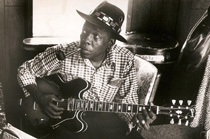
John Lee Hooker
John Lee Hooker

The first year we ran our newspaper ad with the headline “Le Hibou in association with Treble Clef.” We did this so that we could benefit from the Treble Clef high frequency, low advertising rate. But after a year, since we advertised every week, we had a higher frequency than Treble Clef. I then removed the Treble Clef designation since I thought it created confusion, and did more advertising for Treble Clef than for Le Hibou.

We now required one extra person to tend to the door. As I was now working for the CBC, sometimes in the evening, I could no longer be there consistently, and so we needed night managers on a daily or weekly basis. Although Harvey Glatt never managed to work at Le Hibou, George Gordon Lennox, the other partner, did work the door or night manage occasionally. But when he got a job as a journalist with the Ottawa Journal, and later as an editorialist, there was less and less involvement. A few years later George accepted a job with a United Nations agency and moved to Geneva.

Categories
Timeline Recollections

248 Bank Street

The new location at 248 Bank St. looked promising. One could accommodate 60 to 70 people with tables and chairs, well over 100 people with no tables, which we did when we had plays. Of course, I kept the red and white checked tablecloths, the large fat straw covered Chianti bottles and candles even though they would drip on the tablecloths and make a mess, but everybody loved them, including me. I required a stage quickly as I had already booked Tom Kines for the opening week.

Chianti bottle
Chianti bottle

Luckily a long time friend and Le Hibou member Jean Guy Boutin came to the rescue and put a stage together, which of course we painted black. It had a long life as we moved it to 521 Sussex later. Lights were pretty rudimentary—two 150 watt flood lights on a clamp with an on and off switch. We used stitched together black felt and nailed it to a 1 x 2 wood frame which provided a back curtain. There was a small glass brick wall in the main room, which I kept for a while but had to remove later so people could see the stage more easily. The floor was concrete, perfect for sound and security. At about that time (1961) Harvey Glatt, owner of Treble Clef Records, approached George and I about becoming a partner.

Categories
Recollections

Time to Move

By luck, I found a second floor space above a Sherwin Williams paint shop. It was a long narrow space with a small room and a window in the front—perfect to set up the kitchen. The rent was also reasonable. I suspect that the place had been up for rent for a long time, as the manager of paint store was thrilled to have us.

The new Le Hibou site was not the only thing that happened that year. I also married Penny Knight, and we rented a new apartment at 117 Cooper.

Bolex camera
Bolex camera

Gerard Garneau, along with his brother Jean, were regulars at Le Hibou. Gerard worked at the CBC as a studio director, and he was leaving to do his Master’s in International Affairs at Carleton University. He suggested that I apply for his job and said I could count on his recommendation. Having just graduated from the University of Ottawa, and having studied theatre and acted in many plays, even made some short films using a l6mm hand-cranked Bolex camera, I thought, “Why not?” To my surprise, I got the job. As I soon realized, television was new in Ottawa and everybody was learning on the job.

Preparing for the new Le Hibou, I booked my first performer, Tom Kines, a well-known local traditional folk singer. A new era was about to begin.

Categories
Recollections

Pastries and Poetry

I had to find a way to bring in money and new customers, so I decided to open the place up as a little bistro in the evening offering very eclectic cuisine, mainly French but also Italian, Japanese, and even Indonesian.  My future brother-in-law, Alan Knight, who was sixteen and already at Carleton University, became my sous-chef.  Every day I was at the marketplace choosing meats, fish, and vegetables for the evening meal.  It seemed to work, and we had a steady clientele.  They loved the food, the prices, and the fact that I never queried them about the contents of the brown bag they brought along.

We also set up a few tables on the balcony overlooking Rideau Street.  It was probably the first café terrasse in Ottawa at that time.  I recall one particular evening when Carlos, with a beautiful date (as always), came rushing into the kitchen proclaiming that he’d just been server the best salmon he had ever eaten.  I had made a pretty good salmon teriyaki, but I suspect the contents of his brown bag had greatly enhanced the flavour.

Another turn of events helped with summer revenue.  CJOH TV featured a local chef weekly on its early evening program.  For some reason they invited me.  I still to this day have no idea why they did so. Maybe it was for a bit of comic relief.  Alan, as sous-chef, insisted on being there even though they told me I was the only one to be interviewed.  So we each washed our two white aprons (purchased at C.A. Paradis) three times and with lots of bleach so that they would look as professional as possible.  The dish we chose was Hati Bumbu Bali, a highly spiced Indonesian dish.  The choice was inspired by Alan’s brother-in-law, who was Indonesian. In those days, there weren’t any Indonesian restaurants in Ottawa.

Looking back, the dish we chose was probably not a wise choice since liver is not everybody’s favourite.  The interview went well, and I talked abundantly about Le Hibou.  Alan, markedly tall for his age, stood silently in the back, mute as a telephone pole.  Then came the cruncher:  “Could you finish the dish—we have only one minute left.”  I had prepared very little by then (perhaps I should have talked less) and it was a mad scramble for Alan and I to complete a half presentable dish.  Nevertheless, as a result of this interview, we had many new members and diners, although nobody asked for the Hati Bumbu Bali.

Despite a strong membership, Le Hibou could not live on people, pastries, and poetry alone. We needed a larger place, with paid entertainment on the weekends. What’s more, I was receiving not-so-subtle hints from Dr. Dupont, the landlord, that maybe it was a good idea to start looking for another venue, a venue in a commercial district perhaps. I quite agreed. So the search was on to locate a place, preferably in Centretown, close to the two universities and colleges.

Categories
Recollections

A Burst of Growth

That year (1961), the University of Ottawa revealed its twenty-five year building plan, a plan concocted by three people: architect Jean-Serge Le Fort, Bill Boss, the U of O Communications Director and then Rector Rev Henri Légaré.  I was both appalled and infuriated by the plan.  Most of my courses at Ottawa U were in a Le Fort building, a bleak, rectangular, soviet-style building with few redeeming features.  Moreover, these twenty or so buildings that were proposed in the twenty-five year plan had no connecting fabric—just a bunch of buildings scattered about.  I thought that, with the U of O campus being in the heart of the nation’s capital, the city deserved better.

I wrote a letter to the University of Ottawa student paper, The Fulcrum (still going strong), venting all the fury of my young, idealistic heart.  It was not long before journalists picked up the story, and Le Hibou was swarmed by the media for television, radio, and newspapers interviews.  A group of Ottawa architects applauded, met, and pressed for changes to the plan.  At meetings, I met Matt Stankiewicz and John Leaning. More about them later.  The furor was such that the University of Ottawa relented and named Murray & Murray as chief architects, with Le Fort as consultant.  I was pleased with the outcome and doubly pleased to see new Le Hibou members joining up.  Today, as I drive by the University of Ottawa campus, I always marvel that one little article in The Fulcrum provoked such a change.

Summer Doldrums

April arrived and exam time was approaching quickly. It was “cramming time” for many students, including me, since I was still at University. (I passed except for one philosophy course which I had rewrite that August.) Although we had new members, thanks to the coverage from the architecture issues with the University, half of our membership was students and they were busy studying. By summer, attendance was worse. Out-of-town students moved out; others enjoyed the great weather. Not having enough money in the bank to cover the rent, we set up a merry-go-round: I would write a cheque to the landlord, cover it with a personal cheque, George would cover my personal cheque with his, Jean would do the same, followed by Andre, then back to the Le Hibou account. Thanks to that strategy, which gave a few weeks leeway, there finally would be enough money in the account to cover the rent. I don’t think this technique would work now in an electronic era but, at the time, the club wouldn’t have survived without it.

Categories
Recollections

Evolution

Over time, the club evolved by itself.  Glen Kealy organized a chess tournament.  Harry Howith, a local poet, set up poetry readings, with the likes of Barry Lord, Bill Hawkins, and sometimes Brian Robinson, a U of O English professor, would drop in to read his poetry and play his clarinet. Bob Rosewarne, graphic designer and lithographer, met Bill Hawkins then. From this meeting emerged a series of poster poems including the well-known “Postage Stamps.” A friend, Gerard Gravelle, organized the French poetry readings.  Gerard became a journalist and news anchor for Radio Canada television and also played in numerous French and English theatre productions at Le Hibou (more on that later).

Charles "Carlos" Fisher
Charles Fisher

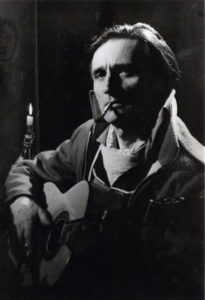
Budding folk singers arrived on the scene; people like Nev Wells, Peter Hodgson, who later adopted the stage name “Sneezy Waters,” and his brother John (who wrote “You’ve got Sawdust on the Floor of Your Heart”).  There was also an enigmatic character, called Carlos by everyone (Charles Fisher), who played flamenco guitar and would pop in regularly.  When Carlos dropped by, we would be granted with an impromptu concert, and before long George Gordon Lennox (who also played guitar) and others would join in.  The thumping of the feet did not exactly please our downstairs landlord.  He would retaliate by playing corny tunes on his electric organ when we held poetry readings—creating a cacophonous effect as the poet read.

During the period of his impromptu concerts, Charles had worked as House of Commons reporter. When the House rose each summer, he would be off to Spain where it was said he had an extended family.  When he died a few years ago, I learned from his obituary that he was also a poet and a good friend of Dylan Thomas.  Apparently, his friends had urged him to write about that era, but for some reason he had refused to do so.

In addition to the music, food, cappuccino, cakes, chess, and poetry, there was always the business side of the club.  Le Hibou was open seven days a week, and Andre fulfilled his part.  As night manager,  he had to kick the strays out and lock the door.  But after a few months of this regimen his law studies were taking a beating.  So it was with regret that Andre had to quit the group.  Not long afterwards, Jean Carriere needed the $800 he had invested to continue his studies.  Reluctantly, we paid it back and lost another good partner.

Staffing, though, was never a problem.  It was amazing how many people were willing to work for what amounted to a pittance and tips.  Many romances blossomed there.  One I recall involved my younger sister, Fernande, who was also waitress.  On the particular night in question, the cappuccinos and cakes were ready and waiting, yet there was no sign of Fernande.  Checking the front room, I noticed Fernande was seated having a spirited conversation with a club member.  That club member, Ralph Kretz, became my brother-in-law.  And of course, Le Hibou is also where I met Penny Knight, who was to become my wife.

At the end of the first winter, we had more than 500 members.  But since half of our membership were students who had exams looming, attendance began to dwindle.  Then an event occurred which gave Le Hibou much publicity and a surge in attendance.

Categories
Timeline Recollections

544 Rideau Street

I located a second floor apartment close to the university at 544 Rideau Street, right above Dr. Dupont’s chiropractic business and residence.  Now that we had a location, we only needed a name.  After several long discussions and many coffees, someone, I can’t remember who, came up with “Le Hibou” (The Owl).  Since we were to open only in the evening, the name seemed perfect.  So in October 1960 Café Le Hibou Coffee House was born.

We had a place, but we still needed furniture, a menu, and a membership card.  A designer friend, Frank Mayrs from Exhibition Canada (a now-defunct federal department that used to set up exhibits all over the world) designed the owl logo for the Le Hibou membership card.  We decided to charge $1 per membership with the hope that it would cover the rent and other expenses.  As George and I were the only ones with cars, we did the rounds of used furniture stores.  Al’s Used Furniture in the market had the best deal, and I picked up chairs for about 50 cents to $1, and tables from $2 to $5.  Taking the cue from my artist friends, we painted all the walls off-white. That was the “in” colour for artists then.

Espresso Maker
Espresso Maker

The piece de resistance was a cone-shaped aluminum espresso maker I picked up in Little Italy on Preston Street.  The espresso was served in a demitasse.  For the cappuccino, we would heat the milk to boiling point on the stove, froth it with a wire whip, add it to the espresso, and top it with whipped cream with a sprinkle of chocolate or cinnamon.  It was amazing how fast we could produce espressos and cappuccinos on that little stove in the kitchen on Rideau Street.  For food, we offered a variety of cheeses, ham on crusty buns, and smoked meat sandwiches on Rideau Bakery rye bread.

On the weekend a student friend of Andre’s, Paul Mostovac, would bake fabulous buttery European cakes on large trays: mocha, chocolate, hazelnut or black forest, all of which disappeared very quickly.  In the front rooms, with visions of a romantic Paris which I had not yet visited, I covered the tables with white and red chequered tablecloths, and placed on each one a straw-covered fat Chianti bottle topped with a candle—Paris on the Rideau.  The walls, however, did not stay pristine white very long as Nikki Patterson, a very talented artist, soon drew beautiful figures on all of them.

Categories
Recollections

Birth

Le Hibou was born out of what now seems a remarkable mix of seemingly disparate events: the Cold War, a live jazz club in Edmonton, Italian espresso on Preston Street, and a few Ottawa guys with a small bit of cash and big ideas. Then it was also the people who contributed, worked, or just hung out—the poets, artists, musicians, but also chess players, bakers, and actors.

It began in the fall of 1960. I was starting my final year as a student majoring in sociology and philosophy at the University of Ottawa. I had just come back from a summer job in Edmonton, where I had worked for the Department of Transport as a lab technician for a joint project with the US Air Force under a Calgary contractor. It was the Cold War, and the Department spared no expense in overseeing the construction of a new runway to accommodate large American refueling aircraft.

There was lots of overtime to be had for the workers, myself included. By the end of that summer, I had amassed what was to me a small fortune, and I returned to Ottawa feeling flush.

Jazz at the Yardbird Suite.

I came back, also having had some new experiences. Ottawa in 1960 had little to offer students in the way of live music or clubs, other than taverns and, even then, only if you were lucky enough to be 21 years of age. To my surprise, Edmonton had a few European-style bistros and even an after hours jazz club, The Yardbird Suite on Whyte Avenue, run by pianist Tommy Banks (now a retired Senator) which I frequented regularly.

While there, I began to mull over the idea that Ottawa should have a little club for students and others, a place to meet and exchange ideas, listen to some good jazz or folk music. Always a lover of food, and with a romantic vision of French cafés from another era, I cherished memories from my teenage years, sipping espresso all evening long with my good friend Jean Guy Boutin in Little Italy—Caffe Italia, to be exact, on Preston Street. Remarkably, Caffe Italia had the only, and I presume the first, espresso coffee maker in town.

I discussed this idea of a little club with a long time friend André Jodouin, also a student at the University of Ottawa. He was very enthusiastic and recruited two other friends, also students, Jean Carrière and George Gordon Lennox. We all agreed to pitch in $800—a significant amount of money at the time, considering tuition for a full year at the University cost about the same amount. André had no extra money, so his share would instead be provided “in kind” by his contribution as a live-in manager, saving him rent money as well.

Categories
Recollections

Music and Theatre

On the music scene, the Tremblay concerts at the Capitol Theatre were bringing classical music and on occasion pop concerts. At one time, there was jazz and all the big bands and big names would come to Ottawa, such as Lionel Hampton, Benny Goodman, Stan Kenton, Ella Fitzgerald, JATP (Jazz at the Philharmonic) who played at the Coliseum, or again in Aymer and Hull, at the Chaudiere or Standish Hall. (Louis Armstrong played there.) But then it became too costly and the touring ended. A bit later the Circus Lounge on the second floor of the Ottawa House opened and brought wonderful small jazz combos, such as Billy Taylor, Marian McPartland, Carmen McRae, and Al Belletto Sextet, but that faded away as well. By the time the sixties came around, most of this was gone.

Fortunately, the Ottawa Little Theatre maintained a steady stream of excellent amateur theatre (and still does, though there are more companies around, now). The touring companies came but were quite sporadic. As for classical dance, it was a struggle to keep the few amateur groups going. Of course, there was dancing—shall we call it “social”—in Hull in some of the clubs, but one needed money and above all a car to get there. Such were the times in the early 60s in Ottawa.

Ottawa Little Theatre's Rich Little (best actor), EODL Festival, 1960.
Ottawa Little Theatre’s Rich Little (best actor), EODL Festival, 1960, and Tom Dunleavy, who later acted in ‘Too many Guys for One Doll’ at Le Hibou.